

Uoichiban: The seafood restaurant that brought me to Tokoname
What happens when a YouTube obsession becomes a lunch stop near Nagoya airport.

It all started with a video recommendation from a friend a few years back. On the surface, the video looked like your regular cooking show: Someone fillets a fish, slices it, puts the pieces on a plate, and adds some garnish to make the sashimi dish look presentable.
But a few videos down the road, you’ll realise these aren’t your regular fishes: huge salmon with a giant sac of ikura, the poisonous pufferfish that only licensed chefs can process, and fresh sea cucumbers that I didn’t know contain so much water — we only have dried ones here in Singapore, and you have to soak them to return them to their original sponginess.
That was Kimagure Cook.
It’s a YouTube channel managed by a regular-looking guy named Kaneko. Over the years, I’ve watched him grow from filming his videos in a cramped kitchen, to upgrading to a bright and clean studio, to, more recently, having his own restaurant, Uoichiban.
As a budding creator, I have nothing but awe and respect for him. And when I decided to visit Nagoya earlier this year, it was my cue to drop by Uoichiban.
Disclaimer: This article contains affiliate links. I may earn a small commission (paid by the featured businesses at no cost to you) if you purchase through these links.
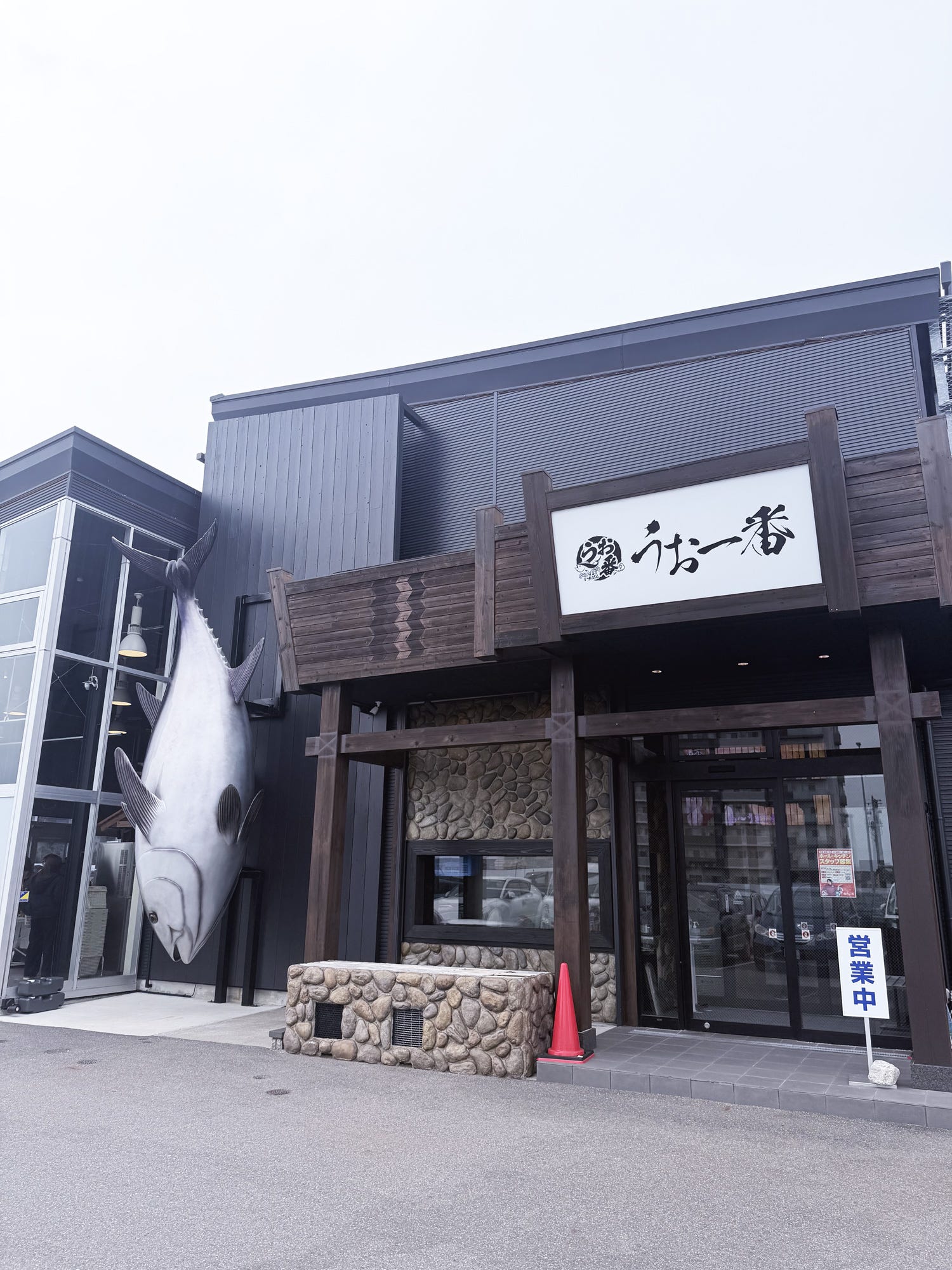
Uoichiban
Uoichiban, which literally translates to “#1 fish”, is located in Tokoname, Aichi, one train stop from the Chubu Centrair International Airport. I’d read reviews that people head down way before the opening time to queue, and even so, they may still need to wait hours before getting a seat. So when I missed my train getting from Sakae to Tokoname, I knew the chances of sitting down and enjoying a meal leisurely were slim.
After leaving my luggage at J Hotel Rinku, I arrived at Uoichiban at around 11am. A quick scan of the digital queue machine told me it could be a two-hour wait. Under normal circumstances, reasonable enough, but with several places still to go on my final full day in Japan, I had to do a rain check.
The good thing is Uoichiban also sells quick bites like fried foods, sushi and sashimi, much like what you’d find in a supermarket. I decided those would suffice, both as an experience and to fill my stomach.
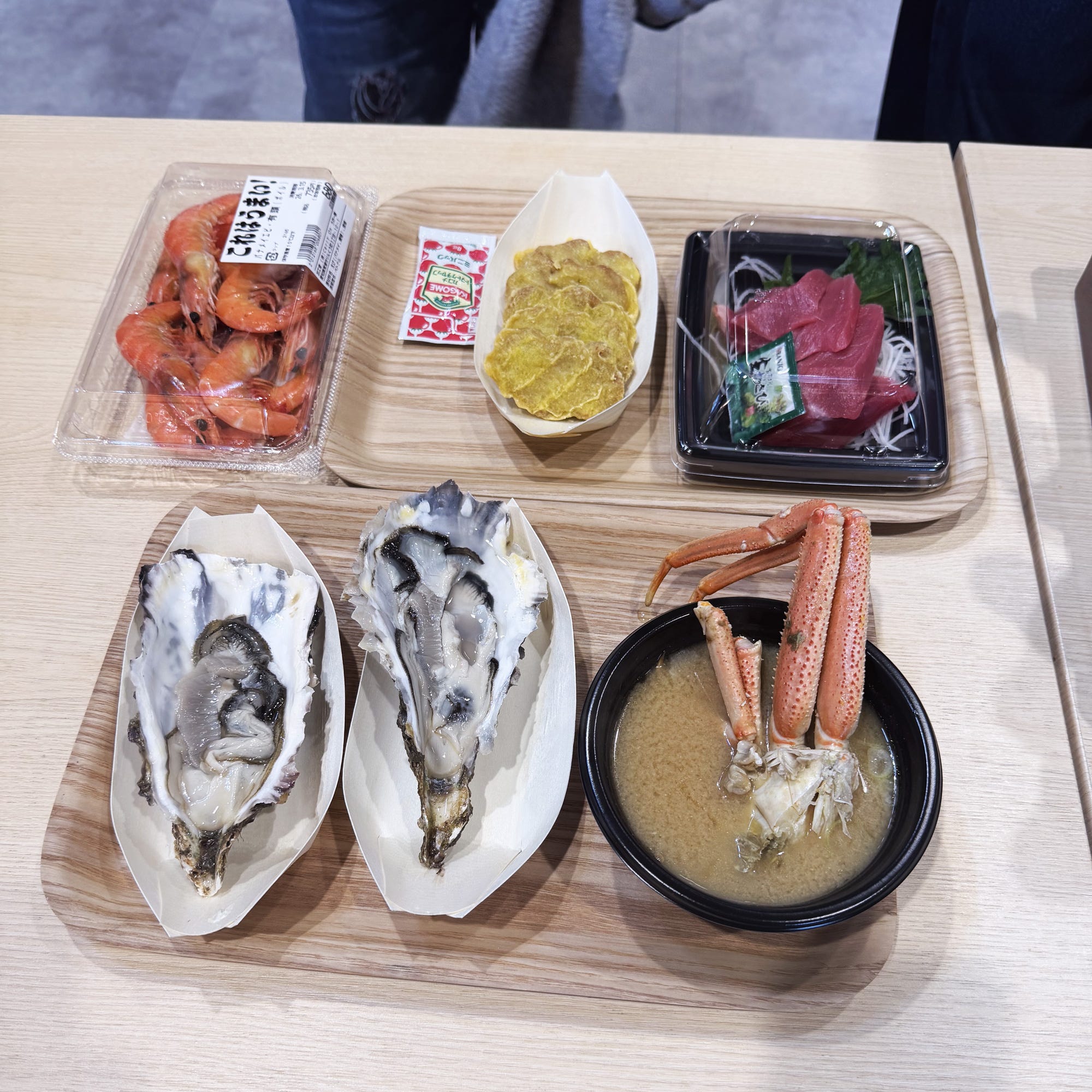
Uoichiban’s food
I ordered a variety from the manned counter to share with my parents: raw oysters, maguro sashimi, saba nuggets, crab miso soup and fried katsuo. My dad also got some prawns and sashimi from the chilled food area.
The ones that stood out for me were the raw oysters and crab miso soup. At first, I thought the oysters didn’t look succulent. I’d also read some bad reviews, so I took a bite sceptically.
Hmm?
There was no weird smell, and that one bite turned out to be quite a mouthful. The oyster looked flat, but it was meaty. It was an utterly strange feeling that changed my perspective on raw oysters that didn’t look the part. Perhaps if it were too juicy, I would have been overwhelmed by its briny, fishy taste — the reason why I used to dislike raw oysters. But of course, that was before I had fresh, quality oysters and learned to appreciate their unique flavour.
The crab miso soup was also an eye-opener. As crabs are considered a delicacy in Singapore, it’s difficult to come by an affordable dish that uses real crab meat. But here we are at Uoichiban, a bowl of comforting miso soup glistering with crab essence and topped with a long crab leg. I never knew that crabs could also produce this buttery, savoury profile that I’d only tasted in lobster bisque.
Uoichiban makes an interesting stop, especially if you’re familiar with Kimagure Cook. It adds a unique touch as a not-so-hidden-if-you-know-where-to-look gem — the closest you can get to eating at a seafood market, whether before your flight out of Centrair or just after arriving.
Learned a couple of things the hard way so you don’t have to:
How the queue system works, and how to use it to your advantage
The best day and time to visit Uoichiban
Full details below.
